Nice!
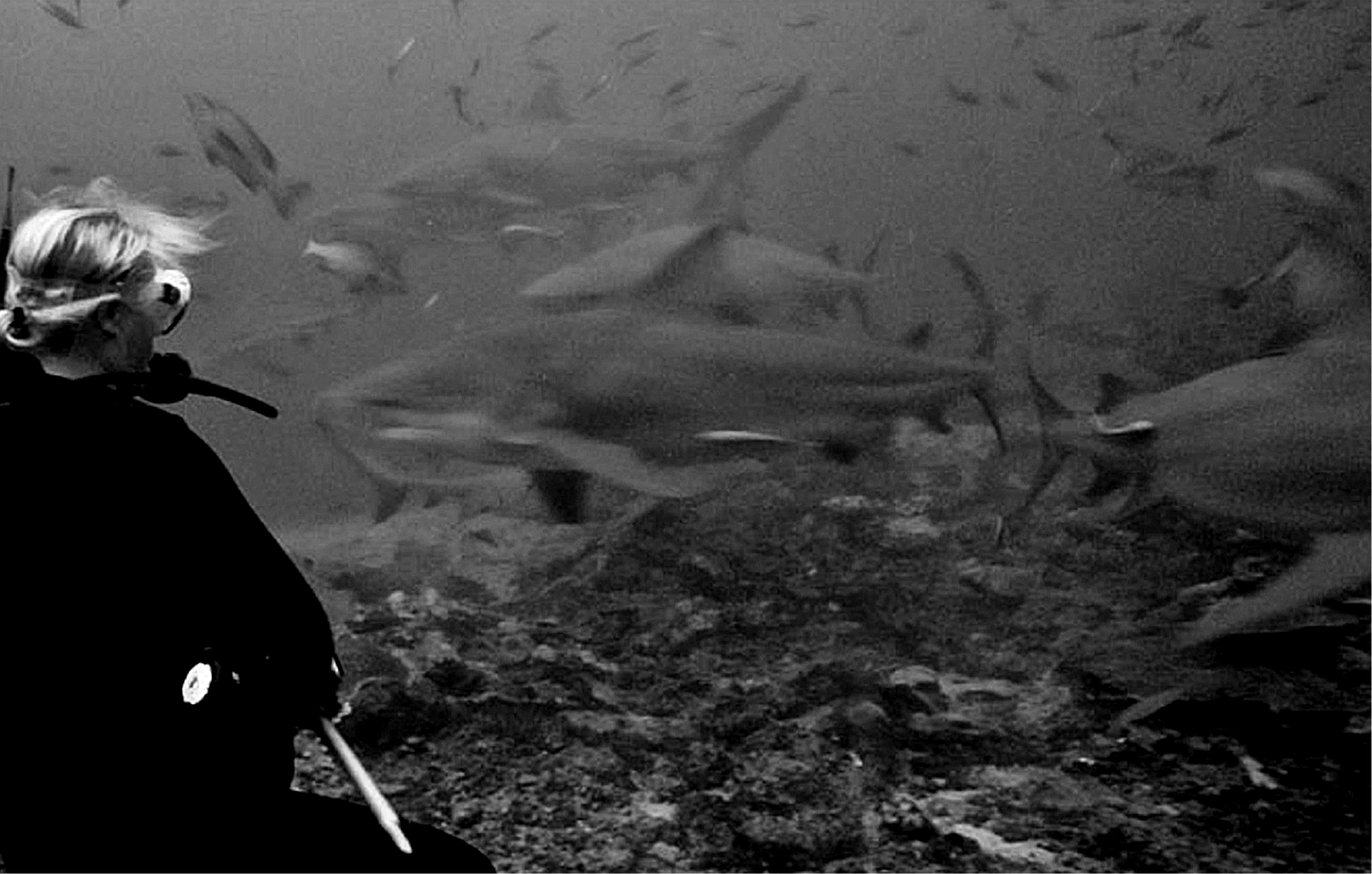
We've recently hosted several shark-enamored bloggers.
Please read this by Kathryn of Friends for Sharks; and this by young Shark researcher Tom; and this by OWUSS Australia Rolex scholar Ben!
Vinaka!


Several studies indicate that threatened species are also caught as bycatch in artisanal fisheries (Godley et al. 1998, Jaramillo-Legorreta et al. 2007, Peckham et al. 2007). Bycatch is defined as the capture of non-target species or undesired sizes of target species (Lewison et al. 2004). Thus, bycatch is typically discarded. However, bycatch can also be retained as valuable source of income, and hence be sought intentionally (Ebert et al. 2013). Furthermore, the association of intentional bycatch of several marine species with artisanal fisheries has recently been reported (Casale 2011). Therefore, inshore shark species may be increasingly under pressure from local-scale artisanal fisheries...
Respondents who had sharks as bycatch were further divided into accidental and intentional bycatch (further described in chapter 1). The distinction between intentional and accidental bycatch was mainly based on the use of sharks caught. Discard of sharks caught is the main criterion in this study for accidental bycatch. Since non-targeted but used sharks may be caught intentionally, any kind of usage (e.g. fin sale, meat sale, regular and repeated consumption) is regarded as main criterion for intentional bycatch.
Gill-nets and hand-lines are commonly used in artisanal fisheries to target reef finfishes (Pratchett et al. 2011). Therefore, the deployment of lines with catch capacities of around 100 pounds and more is used as a further criterion for intentional bycatch. Moreover, the application of spears and spearguns is considered here as technique used for intentional bycatch, since the intrinsic purpose of that fishing gear excludes accidental bycatch.


Compliance to the required minimum distance from the shark was investigated during the 1,082 complete focal follows. During 907 focal follows (84%) at least one snorkeler or boat-holder was observed being less than 2 m away from the whale shark, inconsistent with the code of conduct (Table 2). On average there were 1.9 snorkelers or boat-holders (S.D. = 2.6) and 0.2 scuba divers (S.D. = 0.9) within 2 m of the whale shark recorded every 5 min. The maximum number of snorkelers and boat-holders around a single shark was observed on 7 September 2013 when 19 people were recorded within 2 m of a whale shark and, respectively, on 10 December 2012 when 10 scuba divers were closer than 2 m from the shark.
Data on the number of guests within 10 m of sharks was missing from 62 focal follows in 2012, the remaining 1,020 focal follows showed that in 56.1% of the surveys the maximum number of snorkelers allowed per shark (i.e., 6) was exceeded. The maximum number of snorkelers and boat-holders within 10 m of a shark was 33. Records of the number of scuba divers within 10 m of a shark only started in July 2013. During these 406 focal follows, the maximum of 4 scuba divers was exceeded on 79 occasions (19.5%). Twenty-one scuba divers within 10 m of a shark was the highest number of divers recorded per shark.
From May 2012 to January 2013, researchers systematically counted the amount of active touches from guests and feeders on sharks. A total of 4,832 active touches were recorded over 545 focal follows. Feeders pushing away sharks with their feet or petting the sharks with their hands accounted for the majority of these active contacts (97.6%); while guests were observed touching sharks 117 times. During the 2013 and 2014 survey seasons, feeder touches were no longer systematically counted, because of the lack of reaction observed in the whale sharks. On 114 occasions guests were recorded to actively touch whale sharks during this same period...
The assessment of the compliance to the code of conduct revealed very low adherence to the regulations in place in Oslob.
Most worrying was the decreasing trend of compliance from 21.4% in 2012 to only 3.4% compliance in 2014 in terms of minimal distance to the whale shark. Our numbers are conservative because only people within 2 m of the shark were included in the count, whereas the code of conduct regulating the whale shark watching activities in Oslob dictates a minimum distance of 5 m from the side and tail of the sharks, which means that the real compliance might have been even lower. Free swimming, snorkelling guests tended to have lower compliance than guests holding on to the boat while watching the shark underwater. Snorkelers can control the distance to the shark by either actively approaching the animal or swimming away to keep the required distance; nevertheless 85% of snorkelers were too close to the shark in 2014.


Ming joined forces with conservation non-profit WildAid to launch a public awareness campaign about the devastating effect this soup is having on the ocean’s wildlife...
The campaign has been a huge success, credited with a 50 to 70 per cent drop in shark harvesting. Even better, recent studies show that 91 per cent of Chinese citizens now support a ban on shark fin soup.
Ming’s not stopping there. Having saved the lives of some 50 million sharks...


The rise in public and media interest is closely related to the increased focus from a wide array of elasmobranch conservation organisations, many of which religiously sound alarm bells, but often without any need or use for the supporting science....
While sounding the alarm is necessary and will always be needed to promote change and conservation, I worry about its effect on how we do science. I see an unfortunate trend where the best way to make our science important and relevant is to focus on ‘the-sky-is-falling’ issues. Of the past 20 elasmobranch-related grant proposals and manuscripts I’ve reviewed, more than 80% have resorted to ‘the sky-is-falling’ statements to justify the importance their research, regardless of whether they offered a concrete remedy. In addition, there are already signs of ‘the-sky-is-falling’ science having the undesired effect of generating hopelessness among the public and, more disturbingly, among legislators. Crying wolf without good cause is weakening managers’ ability to implement adequate strategies.


"Sharks like to eat fatty red muscle...” David said.
So why do sharks bite?
Shiffman says it’s usually a case of mistaken identity. “Sharks aren’t used to things being in their environment that isn’t food. When a surfer cuts through the water on his board, wearing a white suit, he can easily be mistaken for a seal,” he says. But most of the time, once a shark gets a taste of his bony human dinner, he backs off in disgust. “The ‘hit and run’ is a common bite — they take one bite and realize it’s not what they wanted to eat,” Shiffman said.