Sunday, September 21, 2014

Nat Geo Wild - being Truthful?


Interesting interview!
Like if I were to put the Megalodon show on air, honestly Nat Geo Wild would get crickets, like I couldn't… my audience doesn't expect that from us...
So right now, what we're doing with Shark Fest – I'm shamelessly letting Discovery do all the work for me. They've chummed the waters. They've brought in a huge number of people, by the way, most of whom don't give a hoot about natural history at all, or about animals in that sense. But they're pulling a big group of people and look, I'm running right under them with a very sort of tongue in cheek marketing campaign that is actually taking a poke at them...
And when people come and they go oh, it's a shark, and then they stick on our network… we're starting to see people who are really appreciative of the difference [between Shark Fest and Shark Week] and are noticing that difference more and more. And they're saying "oh wow, they're not megalodon-ing me, they're actually giving me the real story behind those amazing animals in a way that just feels different to me."...

But the most important thing, sort of bringing it full circle, is we have to be true.
And I think that that takes a lot of courage, it takes a lot of vision and leadership to be willing to have the courage of your convictions and to stand in there while everybody is running one way to say, "this may not be the quickest path to success, but I'm certain that if we stay there that we will create this loyal core of viewers and online followers that will start to evangelize for the network and start to tell their friends and start to tell their families, and that over time will grow."

And so I actually think that the path to positive activism is through emotional engagement. And I think that you can't do that by putting on heavy hitting, dire, guilt-ridden awfulness, because people see that every night on the news.
For me, the mission is about making people fall in love, to fall in love with that animal, to fall in love with that place. And then giving them the outlets and the opportunity to then, in their own way and in their own time, come into the tent and be inspired, to engage on deeper and deeper levels, whatever that level is. Because at the end of the day, I don't need everybody to become fire breathing activists. 
Well said - but is this for real?
Time will tell. At this stage, this all very much smells like a thinly veiled marketing exercise that capitalizes on the fact that Discovery appears to have totally lost the plot. Granted the Nat Geo Wild programs, whilst still utilizing plenty of sensationalist language and fake drama are thankfully not quite as totally moronic as some of the latest shit by DC - but they're still light years away from, say, the BBC, and the breathy claim of being committed to telling the truth is only valid in comparative, and certainly not in absolute terms.
Case in point - and it's by far not the only questionable program!
Re-read this!

And Discovery?
Word on the street is that Eileen has been sacked and that everything is on hold as they all figure out what's next. I'm not at all hopeful that this may be an indication of serious soul searching and re-orientation - but who knows.

We shall be watching!

Friday, September 19, 2014

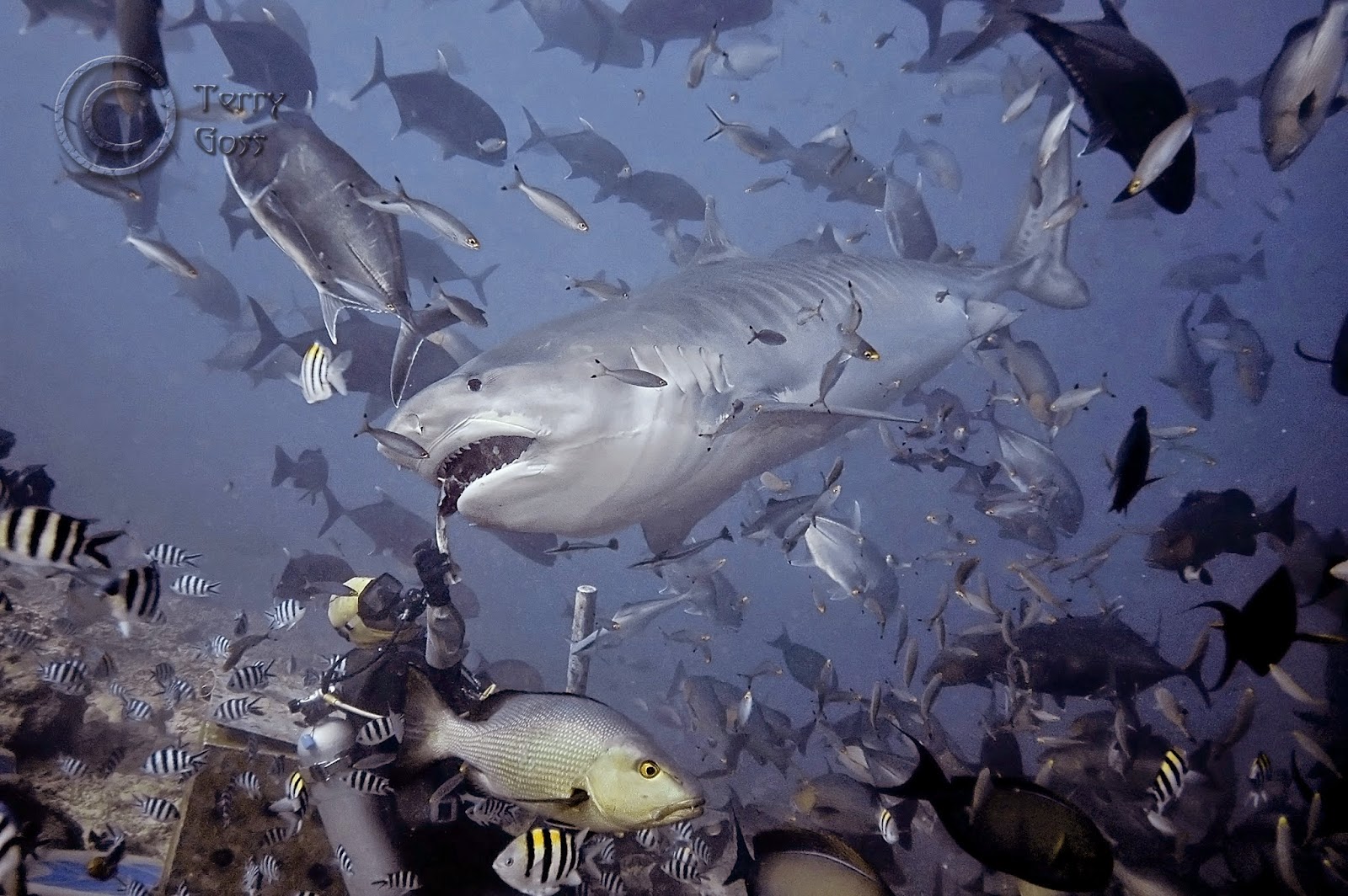
El Diego - that's how you do it!


Finally!

Look at that picture!
Yes El Diego (aka the piscatorial pride of Colombia) is finally displaying some long overdue decorum - remember the boisterous showmanship that earned him a highly disapproving glare from Kira, and a scathing review by El Not Impressed D'oh?
All I can say is that it was about bloody time he cleaned up his act!

But on a more serious note.
That's a juvenile Hammerhead from the Rewa river where Diego has been invited to join a research trip to study Hammerhead shark populations in Fiji. Like announced last year, Juerg and Projects Abroad have now started to cautiously engage with local tertiary institutions. The Hammerhead study is a brand new project by the new Head of the School of Marine Studies at USP, Professor Ciro Rico, and it really looks like this is but a first step towards what will become a rather close cooperation - both academically but also in other matters that will be hopefully announced shortly. 
Ciro is planning to finally elevate the School to its true potential, for which he will need to quickly attain critical high-quality mass - meaning that he is eager to hear from talented graduate students!

So if yer diligent and hi-powered - here's you chance!
And... in your time off, you can come and experience the Best Shark Dive in the Word! :)
Now how good is that! 

To be continued!

Thursday, September 18, 2014

Fiji - the People have spoken!


I must say that I'm surprised.

I expected more of a contest.
Instead, it looks like this has been a veritable landslide - still provisional but by all accounts, the percentages are only going to change marginally. Our staff report that voting has been easy, the media report that the people (as opposed to some politicians) are happy, and the international observers appear satisfied that this has been free and fair.

Oh, and the most important news.
The weather is brilliant, the water crystal and there are still alot of big Bulls! :)

Provisional numbers here.

Wednesday, September 17, 2014

Oslob - the Data!

Remember the despicable Ecoterrorists? Source.

Bingo!

Read this.
I must say that is a great collection of important data, and kudos to the authors for having invested all that energy and time into collating them. I must equally say that the conclusions are rather lousy.

Correct me if I'm wrong, but this is what I read.
  • All whale sharks come and go.

  • All but a very few are males = the females are likely somewhere else = maybe more pelagic?

  • All but a very few that don’t feed are immature, which in combination with the above is consistent with observations made elsewhere = immature male WS form natural aggregations.

  • Some feed, some don’t = this is voluntary behavior, hence the statements that the results of the present study show a significant difference in residency patterns between provisioned and non-provisioned individuals suggesting behavioural modification is quite possibly only partly correct. The increased residency may simply be an individual trait = some immature WS may be simply more resident than others, and since they choose to stay there anyway, they also choose to feed. 

  • The increase in daily individuals is consistent with observations elsewhere, i.e. here in Fiji  where it is however not an indicator for increased residency. Methinks that eventually, the number of daily WS will stabilize as over a determined density, some WS will start feeling uncomfortable and/or start missing out on handouts and leave. And I equally speculate that they will leave once they become adult, see below.

  • Those WS that reside longer are smaller (= younger?) and

  • Those that feed stay longer = possibly conditioning - or may younger WS simply be more resident anyway?

  • I cannot see any evidence that provisioned WS are faring worse than the control group = no difference in propeller strikes. The difference to the WS in Holbox may be due to the fact that the Holbox ones may be more pelagic and thus encounter less vessels? 
Long story short? 
So far, this paper alone does not constitute compelling evidence that provisioning those Sharks is a bad thing. The provisioned Sharks are not being described as having more propeller scars, and there are no statements that they may be otherwise physically impaired.

Leaves the increased residency.
Should it become 100% AND permanent, then those Sharks would be likely prevented from mating = the feeding would have a negative effect at the ecosystem level.
But this is way to early to make that assumption. In fact, methinks that like any other Sharks, those WS will eventually leave what appears to be their immature aggregation site once they become adults, migrate normally and eventually join the females at their mating sites. The latter has certainly been shown for all other places where Sharks are being provisioned. If so, it will be then very interesting to see whether any Sharks will return after the mating season!
But so far, we simply don't know - meaning that we'll have to wait before making any ultimate pronouncements!

The provisioning?
Per se, it appears to have little to no effect - but of course the poor interaction protocols where too many people are being poorly monitored and where, maybe, the total interaction time is too long, see here, need to be reformed. But again, that's a consequence of the protocols, not the feeding - re-read this!
Not easy - but certainly not impossible either!

Or am I missing something here?

Fiji - Elections!


Today is the first election in 8 years.

Polling has now closed.
May the people have chosen wisely, and may the right party win! :)

The results will be starting in 3 hours.
Fingers crossed!

Sunday, September 14, 2014

CITES Implementation Day!


Today the CITES management of those 7 new species goes live!


This is truly a great milestone in Shark conservation.
Projects Abroad have been all over it, and celebrated this momentous occasion with a day of awareness, research and education.
Well done!

And the implementation in Fiji?
It's gonna happen - but in the Fijian way.
More in a subsequent post!

Saturday, September 13, 2014

Only Bycatch - Two!


Turns out that the Tuna longliners have been, gasp, lying!

You don't say!
Did it really take a "study" to confirm what had been obvious all along and what we here in Fiji had known for years?

Anyway.
Good that now, it is out in the open - and good that the FFA wants to bring it up and have it banned at the next WCPFC meeting. There will undoubtedly be the usual dirty politics and stalling (responsible fishing nations?) but eventually, this will be resolved - undoubtedly, only to be replaced by new shenanigans!

And so it goes!

Friday, September 12, 2014

Scarface and Rusi!

Terry-fic pic by Terry Goss.
 
No don't get too excited.

This is footage from 2010.
We haven't seen Scarface in years and although a very experienced videographer on rebreather reports seeing an enormous Tiger Shark, I fear that she has become the victim of all those pelagic long lines out there. The most interesting bit is at 3:17 where the Bulls, far from being intimidated, are actually shouldering her away.

This brings back many inspiring moments.
Enjoy - with a bit of melancholy!


Western Australia - now we wait!


Yes yesterday was cause for celebration.

But!
To those who have started with the chest thumping I say, not so fast!
Yesterday's decision by the EPA is great, and it is also great that the WA Government has stated that they will abide by it.
However on the EPA website, I read this.
The EPA’s report to the Minister for Environment is now open for a two-week public appeal period. Appeals close September 25, 2014 and can be made at www.appealsconvenor.wa.gov.au 

Appeals are administered independently of the EPA by the Appeals Convenor and determined by the Minister for Environment. This proposal is also being assessed under a bilateral agreement with the Commonwealth. This means both State and Federal Ministers for the Environment will make a decision under their respective legislations. Both Ministers will need to give approval for the proposal to proceed.
The Fat Lady hasn't sung quite yet, so let's wait and see how things play out.
The State may still retract its current position and still make a last-ditch attempt at turning things around - in which case the ball would be in the court of the Federal Environment Minister. Hunt has been quite adamant about wanting to do things by the book - but this is the Abbott government that has completely lost the plot (and here!) when it comes to conservation, so there's definitely an element of risk there.
But having said that, I'm actually quite optimistic.

And then, there is this.
You really got to read the exhaustive EPA decision.
You will find that it is based principally on the peer review by CSIRO (three documents here) and that in essence, the EPA is simply applying the precautionary principle in view of the uncertainty about the effects of the cull on the South-Western population of GWS. Only - not the Bulls, not the Tigers where EPA considers that the proposal presents a low risk to the viability of populations for other target sharks and non-target marine fauna.
You may also want to note that the other arguments against the cull have been noted, addressed and essentially dismissed - and that the only aspect the EPA has assessed is the environmental impact, not public safety or ethics or the like.
Just sayin'.

Now, we wait.

Thursday, September 11, 2014

Reef Mantas off Eastern Australia - Paper!

Click for detail!

The paper is open access.
Read it!

Great stuff.
And, it clearly illustrates how behavior is being mediated by the environment.
But we knew that already - right? :)

No more Cull in Western Australia!

Source.

BOOOM!!!

Read THIS!
Yes the EPA is against the cull and the Premier has stated that he will accept their decision!

See? Sometimes the process works!
A big THANK YOU, and congratulations to those of you who have taken part in the Public Environmental Review and have operated with arguments instead of listening to the crazies!

And particularly, bravo Ryan Kempster and SOS!
Excellent job!
 

It's not only Overfishing - one more Paper!

A baited remote underwater video station showing details of the removable bait arm, plastic camera housing and pegs for placement of ballast on the frame (a). Images of Carcharhinus amblyrhynchos (b), C. albimarginatus (c) and Galeocerdo cuvier (d) in the BRUVS field of view.

Remember this post? :)

For Sharks, the principal threat is overfishing.
But of course it only stands to reason that no Shark can survive if we destroy its habitat. We often talk about how healthy Shark populations preserve habitat, e.g. via those trophic cascades - but of course the principal effect is not top down but bottom up, which is actually so trivial that most researchers and conservationists don't even bother to mention it. Methinks that both effects are linked via feedback loops, meaning that negative effects at either side of the equation can quickly lead to a self-reinforcing downward spiral, but of course I'm speculating.

Long story short?
Species protection alone does not work - you need to also protect critical habitats.
That's why we protect the whole of Shark Reef and not only the Sharks, and that's why we continue to investigate the nurseries in the rivers!

The above is obviously particularly evident in those Reefies.
Several species like the Whitetip, Blacktip and Grey Reef Shark are highly associated with and resident in coral reefs, meaning that their dependency on the health of those reefs is likely very high. Other more transient species with a wider range of habitats like the Tigers, Bulls and Great Hammers, likely less so.

This appears to be one of the findings of this paper.
It really is fantastic stuff, the result of ten years of data collection via BRUVS, much like what the volunteers of Projects Abroad are currently doing in Beqa Lagoon. The paper is thankfully open access, meaning that there's no need for citations.
Plus, you can find a great synopsis here - inclusive of highly complimentary comments by other researchers which is really nice to see.

Well done - very impressive indeed!

It is not only Overfishing - Paper!

Click for detail.

Remember this post?

For Sharks, the principal threat is overfishing.
But the other threats are of course equally a cause of great concern, plus our increased encroaching into their habitats that is leading to conflicts and persecution. And now for possibly the first time, this paper is examining the likely effects of Global Warming and Acidification on a tropical Shark.
Synopsis here, so I need once again not elaborate.

Though this is perplexing.
From the Discussion.
Although the vulnerability of tropical sharks to climate change is species-specific, factors such as temperature, sea level rise and freshwater input are assumed to elicit the greatest effects upon estuarine, coastal inshore and reef species. Such effects are likely to be expressed through changes in species abundance and distribution (e.g. poleward movements and migrations to deeper waters).

Until now, ocean acidification was not considered as a primary climate-related threat to elasmobranchs; only indirectly through habitat and community changes (e.g. reef sharks).
Experimental approaches such as those shown in the present study are critical to directly assess risk and vulnerability of sharks to ocean acidification and warming, and can ultimately help managers and policy-makers to take proactive measures targeting most endangered species. 
Proactive measures?
As in...? Suggestions welcome!

Coordinated Hunting between Groupers and Morays - Paper!


Watch this.


Very interesting!
There are this and this excellent synopses so I need not elaborate.
I learn that coordinated hunting is apparently different from the widespread cooperative hunting where several species cooperate opportunistically. When I think of those Sea Kraits and Jacks I've seen hunting together in Niue (and apparently elsewhere), it sure looks very very similar - but who am I to say!

Open-access paper here!

Orcas vs Tiger Shark!


Wow.
After 20 years diving, 10 of them at Cocos Island; she gave me the most incredible experience so far at sea. We were witness of how 6 killer whales hunted, killed and fed on a tiger shark. just unreal experience!!! I just filled my tank for 20 more years ;)
Enjoy and be amazed!


Culling the Sharks of the Neptune Islands?


I believe there will be some culling, some time in the future there will be culling of sharks, because we will have other shark attacks.
The lady at the top is Valerie Taylor.
Next year, she's going to be 80 - and she is still fighting for the Ocean, like she has done for the past 50 years. She is a titan in marine and Shark conservation and one of Australia's most honored and revered personalities - and rightly so.

And some assholes are trying to destroy her legacy.
It's not only about the Sharks - what is at risk is the precious and totally unique marine ecosystem that was finally protected in 2012, specifically also the Neptune Islands Group (Ron and Valerie Taylor) Marine Park that is honoring her and Ron's tremendous contribution to marine conservation. And this is also going to impact Rodney and Andrew Fox's pioneering Shark tourism operation that continues to generate millions in tourism dollars and has become a pivotal platform for education, research and conservation in Australia.

This shit is so bad, it is just simply absurd.
Valerie is fighting this together with local conservation groups and politicians which is great. But whilst I can find this Facebook turd (wow - just wow) on the anti protection side, I see NOTHING on all those usual sharky social media that profess to be saving sharks with all those actions and petitions and awareness and statements and the like.

And all those names?
All those whisperers an warriors and girls and whatnot that have all been rushing to WA like fucking lemmings in order to promote themselves as Shark saviors? Quite obviously, totally missing in action! You may want to remember that next time somebody wants to convince you that they are fearless and badass!

But I'm digressing as always.
Fingers crossed that common sense prevails!
Alas, in this case, I'm not very hopeful.

Tuesday, September 09, 2014

Sustainable Shark Fisheries in lesser developed Countries?

Devastating - unsustainable small-scale Shark fishing. Source.

So there.

Remember this post?
Back then, it did earn me plenty of flak from the movement - but times have moved on and the concept of sustainable fishing of some (!) species of Sharks is apparently becoming more accepted, to the point that I was very happy to read this really quite excellent post on the Ocean Campus website.

I could not agree more when I read that
... countries are beginning to put measures in place to increase the sustainability of their shark fisheries, and research is constantly being done to further their efficiency. 
In my opinion, it is the development of these biologically based, best practices, concerning reproductive traits and ecology of shark species which hold the greatest potential in minimising shark stock collapses and population declines. Fragmenting the conservation effort by targeting single practices (such as implementing shark finning bans) can obstruct the development of more effective shark management tools.
But of course, there is a big BUT!
From the paper.
Abstract.
(...)
PERMANOVA analysis showed that over-exploited and depleted fisheries employed different sets of measures than fisheries with healthier stocks, and a non-metric multidimensional scaling ordination illustrated that a broad set of regulatory measures typified sustainable fisheries.
SIMPER and regression tree analyses identified that the dissimilarity was most related to enforcement capacity, number of species harvested, fleet (vessel) controls, limited entry controls and rotational closures.

The national Human Development Index was significantly lower in countries with over-exploited and depleted fisheries.
Where possible, managers should limit the number of fishers and vessel size and establish short lists of permissible commercial species in multispecies fisheries. Our findings emphasize an imperative to support the enforcement capacity in low-income countries, in which risk of biodiversity loss is exceptionally high. Solutions for greater resilience of XYZ stocks must be embedded within those for poverty reduction and alternative livelihood options.

Trends in sustainability and exploitation
(...)
Management measures
Enforcement (and compliance) capacity varied greatly among fisheries and tended to be weak in tropical fisheries in low-income countries.(...)
The PERMANOVA contrasts showed that, in terms of variables potentially controllable by the fishery manager, under-exploited, moderately exploited and fully exploited fisheries were similar, but differed significantly from management variables employed in over-exploited and depleted fisheries. The subsequent SIMPER analysis identified that enforcement capacity was the management tool most strongly related to the dissimilarity between unsustainable and sustainable fisheries.
Nonetheless, other management variables were also important and contributed only slightly less to the dissimilarity than enforcement capacity. Specifically, the other management measures important in the majority of difference between sustainable and unsustainable fisheries (in descending order of importance) were the following:
  1. fleet (vessel) controls,
  2. limited entry controls, 
  3. rotational harvest closures, 
  4. the total number of species harvested by fishers, 
  5. licensing and reporting requirements, and 
  6. the number of regulatory measures used by the manager

Discussion

We aimed to relate management measures to sustainability of XYZ fisheries, and our analyses indicate that resilience of social-ecological systems (SESs) of XYZ fisheries will come from strengthening enforcement capacity, allowing only a small number of species to be harvested, applying input controls, reducing the number of fishers per unit of fishing ground and improving the socio-economic state of human communities. (...)
Stocks of commercially valuable species have been depleted at a comparably fast rate over much of their distribution. Many XYZ species face a high risk of extinction through overfishing coupled with inherent biological and ecological vulnerability. Apart from an unlikely reduction in demand from Chinese consumers, we believe that sustainability and resilience of troubled XYZ fisheries will only come from the adoption of radically different approaches to management.

Enforcement drives sustainability 
While marine reserves, international trade agreements and stock assessments may be important tools for sustaining XYZ stocks, our analysis highlights the importance of enforcement capacity in fisheries sustainability.
Indeed, many fisheries struggle with deterring fishers from illegal activities by compliance measures or strict penalties. The SIMPER and RT analyses both indicated that depleted and over-exploited XYZ fisheries predominantly had weak enforcement capacity. Thus, fine-tuning management regulations or developing complex management plans are less likely to succeed in protecting minimum viable populations of XYZ than investment in compliance and enforcement. (...)  

Conclusions

Stocks of commercially valuable species have been depleted at a comparably fast rate over much of their distribution.
Many XYZ species face a high risk of extinction through overfishing coupled with inherent biological and ecological vulnerability. Apart from an unlikely reduction in demand from Chinese consumers, we believe that sustainability and resilience of troubled XYZ fisheries will only come from the adoption of radically different approaches to management.
Recent assertions about improved management of XYZ fisheries have centred on regulatory measures and management actions, marine reserves and international regulations, research, monitoring and harvest strategies.
Our findings reveal that a new paradigm is needed for managing XYZ fisheries; one in which resources are shifted from the development of complex management plans to enforcement and compliance of simple sets of regulations and to tackling the socio-economic challenges of coastal fishers that transcend fisheries. 

The best devised management plans will fail if disincentives to illegal fishing activities are not strong enough and/or if underlying poverty of fishers is not improved. We also conclude that multiple management measures are needed in XYZ fisheries but not so many that they cannot be easily understood and enforced.
In addition to compliance and enforcement, the key regulatory measures appeared to be the following:
  1. a small list of permissible species for exploitation, 
  2. fleet controls, especially on the size of boats in the fishery, 
  3. limited entry controls to restrict the number of fishers, and 
  4. licensing and reporting requirements.
Evidence of slow growth, low natural mortality and high longevity in some species underscores the need for more conservative management strategies than in the past and cautions the use of conventional fisheries science underpinned by estimations of maximum sustainable yield.  
The great variation in the scale of fishing activities, management systems and technical capacities of management bodies means that multiple, country or region-specific solutions will be needed to redress the shortcomings in collapsed fisheries.

Operationalizing an ecosystem approach to fisheries management (sensu Garcia et al. 2003) requires a greater involvement of stakeholders, consideration of alternative management systems and a higher priority of social science in management institutions.
Resilience in XYZ fisheries will come about only if fishers are part of the management system and can adapt quickly to changes in the resource. In the vast majority of global fisheries, regulations towards sustainability are commonly undermined by political pressures (Mora et al. 2009).

Transformation of the management paradigms currently undermining XYZ stocks, therefore, inevitably needs to be supported by decision-makers resolutely if these animals are to remain valuable to the livelihoods of coastal peoples and provide the eco-services that contribute to healthy marine ecosystems. 
There you have it.
The poorer the countries, the more depleted the stocks.
And if we want to establish sustainable fisheries, we have to develop simple, often country-specific management tools, we have to involve the stakeholders - but we also have to tackle poverty and above all, we have to boost compliance and enforcement.

The paper - have you divined the species XYZ?
It's not at all about Sharks - it is about Sea Cucumbers!
Thing is, when it comes to lesser developed countries in the tropics, I can find plenty of literature about large-scale, industrialized commercial fisheries for pelagic Sharks but nothing about those small-scale artisanal fisheries that are wreaking havoc on the coastal species.
The Sea Cucumber paper is an excellent proxy not only because it sheds a light on those coastal fisheries but also because in places like Fiji, the Sea Cucumber traders are increasingly promoting Shark fins as a high-value alternative for those depleted and ever more rare Sea Cucumbers. Both fisheries supply the same essentially Asian consumer markets, involve the same people and socio-economic issues, and follow the general trend whereby they are equally often not, or badly managed and unsustainable (e.g here), and exploit the same lack of resources (and often lack of determination and/or corruption) and resulting insufficient to nonexistent enforcement by the local authorities.

Solutions?
It's same old same old.
  • Legislate Shark Sanctuaries as stop-gap measures.

  • Where possible, create alternative livelihoods e.g via tourism or aquaculture.

  • Eventually and where adequate, establish science-based and sustainably managed fisheries, however with much smarter, and way cheaper monitoring and enforcement.
    In the case of those small-scale commercial fisheries, monitoring every single fisherman and landing site is mission impossible - the good news being that the bottleneck are the fin traders that are both driving the fisheries and aggregating, processing and exporting the fins. They are relatively few, easy to identify and easy to monitor. Reverse the burden of proof and let them prove that the trade is sustainable and legal, and make it a condition of their license to provide the data required for management.
There you have it - not easy but not impossible, either.
Or am I missing something here?
 

Monday, September 08, 2014

Until a group of Western Environmentalists turned up!

 
The video description reads.
Giants of the deep: The fight to save Whale Sharks

They're the biggest fish in the ocean - making them one of the biggest targets for fishermen around the world. The whale shark is massive, magnificent and on the brink of extinction. But in a tiny corner of the Philippines, man and shark have come to a unique compromise. Fishermen, who used to hunt this marine giant, now protect it - reaping a financial bonanza from tourists.

And everything had been going swimmingly, until a group of Western environmentalists turned up.
Indeed.
As in Alessandro Ponzo (che rima con stronzo)!
But watch the video, it is great stuff.


First and foremost, Bravo Mark!
Mark Meekan is a heavyweight in Shark research and conservation in general and Whale Sharks in particular, and his statements could not have come at a better time. Ponzo's continuous vociferating is resonating in the conservation community all the way to some of the biggest and most respectable organizations, and the pressure on Oslob is mounting.

I've said it here, the screeching opposition is total bullshit.
If deprived of the tourism income, the fishermen will revert to what they were doing before and kill those Sharks. Instead of throwing the baby out with the bathwater, the solution lays in investing one's energy into reforming, implementing, monitoring and ultimately, enforcing the interaction protocols. 
Not rocket science is it - that is, unless one is driven by some idiotic Shark hugging agenda or even worse, by one's wish to promote their sites XXX and YYY and shut down the poor people in Oslob without giving them a chance to improve, like a prominent Shark conservation advocate writes.
And it's not only the fishermen and the local economy - this is creating thousands of Asian Whale Shark lovers!

We shall keep an eye on this.
For now, huge kudos and a big THANK YOU! to Mark for having lent his authoritative and unambiguous voice to the debate!

Sunday, September 07, 2014

El Diego - Family Weekend!


Yes we got Sharks!
Enjoy!


Sonic Boom!

Ash clouds from Tavurvur volcano spread across the eastern part of Rabaul town on 19 September 1994, as seen here from Observatory Ridge at 7.30 am. The lower of the two layers of cloud represents an earlier phase of the eruption. Source.

Wow.

I will never forget Rabaul.
I was on the infamous Voyage of Discovery, and was keeping a log for a German dive mag.
This is what I find, c/p.
Rabaul, Neu-Britannien, Papua-Neuguinea, 9.-13. August 2002 

Menschenskinder, in was bin ich denn da hier hineingeraten...!!!! 
Rabaul, das soll mal eine der Perlen der Südsee gewesen sein, idyllisch gelegen in einem der sichersten Naturhäfen der Welt, mit wunderschönen Promenaden und Stränden, einem regen Handel, feinen kleinen Hotels und Restaurant, sogar eine eigene Musikszene soll's hier mal gegeben haben.
Gehört hatte ich davon vor gut zwanzig Jahren in Cooktown, Nordostaustralien. Ich hatte dort einen Muschelsammler besucht und der kramte die tollsten seltenen Kauris hervor, alle in Rabaul beim Nachttauchen an den senkrechten Steilabfällen gefunden. Und damals hatt' ich mir geschworen, einmal würd' auch ich nach Rabaul reisen.

Und nun bin ich hier und, gelinde gesagt, vƶllig geschockt. 
Denn zwischen dem GesprƤch in Australien und heute passierte der 19. September 1994. Da fing der kleine Tavurvur an, meilenhoch Rauch, Lava und Asche zu spucken und eine Stunde spƤter, auch der grƶssere Krater auf der entgegengesetzten Seite der Bucht, Vulkan. Zehn Tage ging das praktisch ununterbrochen so weiter, begleitet von Erdstƶssen und Schlammlavinen, und am Ende war der ganze moderne Teil von Rabaul unter einer mehrere Meter dicken Schicht aus Asche und Bimmstein begraben.

Tavurvur machte noch bis letztes Jahr regelmƤssig mƤchtig Radau, mit noch mehr Asche und mit DonnerschlƤgen, die bis in Neu-Irland gehƶrt werden konnten und deren Druckwelle bei der Coca-Cola-Abfüllanlage die Hangartüren aus den Geleisen springen liess. 
Heutzutage raucht er mehr oder weniger friedlich vor sich hin, wobei die nƤchste Katastrophe lediglich eine Frage der Zeit ist, denn die Region ist und bleibt unstabil. Und dabei war ja dies alles nichts mehr als, auf gut Deutsch gesagt, chickenshit: denn all diese Vulkankegel rundrum sind lediglich kleine Pickel auf dem Rand des eigentlichen, riesigen Vulkans, dessen Caldera das Hafenbecken bildet. Sollte der jemals wieder ausbrechen – was anscheinend alle 3000 Jahre geschehen soll – wird hier wohl alles im Umkreis von 50 oder mehr Kilometern zerstƶrt werden.
...

Ganz anders die Situation damals in Rabaul. 
Hier scheinen die meisten Einwohner den Ausbruch als einen unvermeidlichen Schicksalsschlag aufgenommen zu haben und somit wurden auch keine nennenswerte Versuche unternommen, die Stadt zu retten, obwohl dies am Anfang durchaus mƶglich gewesen sei. Einzig die Hoteliers des Hamamas Hotels und der ehrwürdigen Kaivuna Lodge fuhren sobald mƶglich zu ihren GebƤuden, um die Asche von den DƤchern zu entfernen. Fast alle HƤuser standen damals noch, aber als dann der Regen kam, verwandelte sich die Ascheschicht in eine tonnenschwere Last und eines nach dem anderen brachen fast alle anderen GebƤude nach und nach darunter ein, wochenlang soll das gegangen sein. Die lokale Verwaltung war zudem total überfordert und überliess das Feld kampflos den Plünderern, die die fast noch grƶssere Zerstƶrung anrichteten. 
Davon hat sich Rabaul nie erholt. 

Ich hab mich in der Kaivuna Lodge einquartiert und versuche, etwas von der alten Südseeatmosphäre zu erhaschen.
Aber das ist wirklich vergebliche Liebesmüh, das StƤdchen hat sich selbst dem Untergang geweiht und vegetiert vor sich hin, zehrt von der spƤrlichen noch vorhandenen Infrastruktur, bis diese dann endgültig ihren Geist aufgeben wird und es Zeit wird, den endgültigen Exodus einzulƤuten. Dort, wo ich residiere, wurde genau eine einzige Strasse freigeschaufelt, ansonsten breitet sich so fern das Auge reicht eine karge Einƶde aus, aus der die spƤrlichen Überreste des ehemaligen GeschƤftsviertels ragen, wie Kulissen eines Endzeitfilms. An den StrassenrƤndern, wie schmutzige Schneeverwehungen, meterhoch die Asche, spƤrlich von GrƤsern überwuchert, immer wieder vom Wind hochgewirbelt und andernorts wieder deponiert. Vor dem grosszügigen Treppenaufgang eines der ursprünglichen PrachtgebƤude, von dem heute nur noch die geplünderten Fundamente traurig in den Himmel starren, sind noch die ParkplƤtze eingezeichnet - doppelt ironisch, denn mittlerweile scheint's hier auch fast keine Autos mehr zu geben. An einer einsamen Backsteinfassade, die bunte Aufschrift "Always" und darunter, halb aus dem Substrat emporragend, die Abbildung einer Colaflasche – das letzte mal, dass ich sowas gesehen habe, war in "Planet of the Apes".

Etwas weiter immitten der Einöde, das damals gerettete Hamamas Hotel, wie die Kaivuna Lodge gerade noch akzeptabel, mit schmucklosen Räumen mit aircon und Fersehn ( MTV , Australisches Frühstücksfernsehn , Sportkanal und als besonderer kultureller Leckerbissen, Indische Hitparade) aber anständigen Restaurants.
Und dann der Rabaul Yacht Club: gut hundert Meter vom trüben Wasser entfernt, umgeben von aschgrauer Wüste, ein Paar lieblose unverputzte Backsteinblƶcke, welche als Tavelodge ein karges Dasein fristen und dann ein Wellblechdach, der "Club" selbst, unter dem eine menschenleere Bar dahinvegetiert, drumherum ein rostender Zaun mit Stacheldraht: in acht Jahren wurde hier kein Strauch und kein Grashalm gepflanzt, keine Boje gesetzt, keine Jetty gebaut, die Strasse hierher eine Sandpiste – traurig und hoffnungslos, no future.


Ursplünglich wollten wir uns vor dem Yacht Club an die Mooring hƤngen, aber es ist hier so trostlos, dass wir am anderen Ende der Bucht am Dock bleiben, trostlos ebenfalls aber zumindest nahe beim Markt und dem Spritterminal - für mich jedoch gute 45 Minuten staubiger Fussmarsch unter der sengenden Sonne, denn Taxis gibt's hier nicht und das einzige Auto der Lodge ist meistens ausgebucht, um GƤste im 40 Minuten entfernten neuen Flughafen abzuholen oder die wenige Taucher zum Beachdiving zu karren. 
There you have it - sonic boom and all! :)

Anyway.
Back then in 2002, it was an eerie dead place, with an ash cover of several feet. The people had been relocated to Kokopo, but a few, like the owners of the Kaivuna Lodge where I stayed had dug out their possessions from the ashes and persevered, against all odds. Rabaul sits on the rim of the enormous Rabaul Caldera, a pyroclastic shield volcano with several side vents, among which the devastatingly dangerous Tavurvur and Vulcan, and it was only a matter of time til one would explode again.

And explode it did.


Stories here and here - background here.
And there's another video here.
 

Saturday, September 06, 2014

Killing Manta Rays - Paper!

Worth much more alive than dead (and here!). Source.

Great paper!

But first.
You harvest what you have sown and planted - not Manta Rays, and not their gill rakers.
Call it killing, or fishing, even hunting - because that's what it is. And the gill rakers are being cut out, extracted or gathered.
Words are important.

Anyway, the main conclusion is this.
Emphasis is mine.
Notwithstanding the current uncertainty in the life history of manta rays, given their very low productivity coupled with small localized populations and predictable seasonal aggregations, the unregulated targeting of local Manta populations for their high-value gill plates is unlikely to be sustainable. 
The largest targeted fisheries and highest mortality occurs in Indonesia, Sri Lanka, India, Peru and Mozambique and these countries have little fisheries monitoring, regulation or effective enforcement. 

The time to local extinction depends on the size of the population and the rate of fishing mortality. The very low productivity of manta rays mean that even a moderate level of fishing mortality of F = 0.2 (survival = 0.81) would reduce a small population of 100 individuals to fewer than 10 within less than a generation span (11 years). The key challenge this poses is that it leaves little time to mount an effective conservation management response. 

These serial depletion fisheries are operated by low-income subsistence coastal fishers, often against a backdrop of declining fish stocks. For such fishers the international market demand for valuable Manta and mobulid ray gill plates is likely to provide a desirable income. Such fisheries tend to be unregulated and even if there are protections these are difficult to enforce, which underscores the importance of international trade regulation. 
Paper here!
 

Friday, September 05, 2014

New Girl on the Block!


Bravo El Diego!

As the curator of the FB list, he has become a veritable ID pro.
Case in point, he has just spotted this new small female with her unmistakable rounded first dorsal.

And the name?
Usually, it reflects the distinguishing feature, and this one is no exception: meet Oceania - because her first dorsal is vaguely reminiscent of that of an Oceanic Whitetip!
And because it's a nice name, too!

TGIF - one Hour of pure BBC Goodness!


Fuckin' amazing!
Enjoy - and I mean it!


Shark ID - Help wanted!

These are Bulls Sharks - click for detail!

Check this out!

What are those Sharks among those Grey Reefies?
Methinks Dusky/Galapagos (but possibly Bronzie?) and.... Pigeye (!!!) - the latter because she doesn't feel like a Bull, and because I read that from C. amboinensis, the bull shark differs in its lower, less erect first dorsal fin and higher, more erect second dorsal fin. The ratio of first:second dorsal height is 3:1 or less in C. leucas, but over 3:1 in C. amboinensis.

Opinions please!
JSD - David?


360-Degree Shark Dive in Yap!

Source.

This is way cool!
Use the mouse to change your perspective.
Yap is a Shark sanctuary.

Enjoy!


Thursday, September 04, 2014

Pacific Icons!

Avatea - source.
Sharks are iconic to Pacific islanders’ culture, beliefs, traditions and sense of identity through totems. From Kiribati, Solomon Islands to Fiji and across the Pacific, shark legends and tales make up the rich cultural fabric that is the heritage of Pacific islanders.

Sharks and their close relatives, the rays, are important as well for food security by maintaining healthy reef systems that people rely heavily on for their main source of protein and income. Important for cultural expression, food and livelihoods it is inconceivable therefore to allow a situation where Pacific islanders exist without sharks and rays.
Indeed!
Yes this is good news - more details here.
To be continued!

Pelagic Bull Sharks?


Wow.

If you can, please watch this.
Yes it's long but well worth the effort.


I'm stumped by the revelations at the end.
Apparently, Reunion's Bull Shark are not resident but only seasonal and apparently, they could be spending a large amount of time in the open ocean.
If so, this would mean a big shift in what we know about this species.

Or maybe not. 
Maybe this is simply more evidence for the environmentally mediated behavioral plasticity I've posted about here. Maybe those Bulls rely on migratory prey and only return to Reunion to mate - think of Playa where contrary to Fiji, there is merely a short Bull Shark season that is being linked to reproduction and where so far, nobody knows what they do during during the remainder of the year.
Maybe.

And the hypothesis of heightened aggression during the mating season?
Not convinced. Aggression is not predation and to me, those described strikes point to predatory events rather than agonism. Plus, our Bulls don't feed during mating season - but then again, this applies to Fiji and maybe, those Bulls behave completely differently!

Long story short?
It is complicated!

Wednesday, September 03, 2014

Pacific Shark Heritage Programme?

Source.

Read this.

I don't fully understand it, but it is undoubtedly good news.
More once I know more.

Tuesday, September 02, 2014

Scientists about Shark Mitigation Measures!


Watch.


97% of those polled scientists are against lethal control measures.
Incidentally, those would be the very people that were picketed, heckled and insulted by Lesley Rochat and her Shark Warriors.

Vindicated my ass!
That whole project, or whatever, is increasingly becoming bizarre and frankly, rather sad.
What a shame.
 

Monday, September 01, 2014

Wild Tiger Shark in Micronesia!


Just got this from Timbo.
I had an interesting trip that went from Cenderawasih, West Papua, to Ulithi. We had an "interesting" tropical storm in Ulithi. 
My biologist friends from Guam were there, mostly snorkeling, looking for manta sites. Look what happened when they were snorkeling. The guy who shot this was the only guy with a big camera.


So much for Tigers being nothing but placid Buddhas.
And no, there was no bait in the water - you TB groupies and sharkxperts, take note!
 

Sustainable Shark Fins - encore!

Indeed!

Hah!

I totally missed this when it came out.
Please do take the time to watch it.


And now, read this op-ed by KT Tan.

Same old same old - remember this post
There you will also find links to excellent answers by Shark Savers to those allegations. In essence, KT's arguments once again detract from the fact that the majority of the fins originate from completely unregulated, unsustainable and often illegal fisheries.
So no need for me to dwell on a rebuttal.

But of course there's also a big kernel of truth!
It is certainly completely wrong to engage in unilateral Asia bashing. 
And from a conservation point of view, it makes absolutely no sense whatsoever to ban the fins of (already dead) Sharks that have been fished sustainably, let alone been certified - the more since if you watch the interview with the Singaporean fin trader at the end, there already appears to be a trade in sustainably sourced fins.

So, it's back to square one isn't it.
The various campaigns to curb the demand for Shark fin soup are laudable, and the successes are impressive - nice synopsis with excellent comments by Sam here. But like she correctly remarks, Sharks continue to be targeted for other reasons, and bycatch rates plus IUU remain a grave concern.

Solutions - and I am of course repeating myself!
But to facilitate the monitoring and the enforcement, this is what we should ask for
  • That anybody trading in Sharks and Shark parts come up with independent proof that his merchandise originates from sustainable and legal fisheries and has been obtained by legal means
As long as that proof is not forthcoming, the pressure on the industry should be kept up.
But once the industry shows a willingness to reform,
  • Let us help establish and grow a premium market for certified Shark fins from sustainably managed Shark fisheries!
I know - not what the breathy sharktivists want to hear.
But it is the right thing to do. Like I said, you may oppose it and and then find yourselves trying to catch up later - or you can embrace it and be at the forefront of smart pragmatic conservation.

The choice is yours.