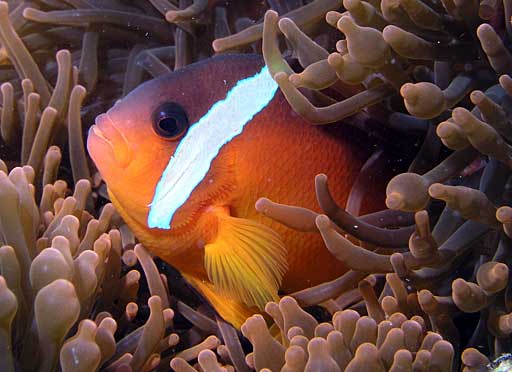
Cribrarula exmouthensis rottnestensis anybody?
Thought so!
Thing is, when I started collecting Cowries, my trusted field guide featured one Genus, Cypraea and two species of Sieve Cowries, cribraria and cribellum.
Now, Cypraea has been elevated to the rank of Family and there's a plethora of Genuses, among which Cribrarula - and as to what happened to the species, what can I say: there's a whole array of cribraria all the way to Cribrarula cribraria cribraria zadela; Cypraea cribellum has become Cribrarula esontropia cribellum; and the above-mentioned West Australian Sieve Cowry has slowly morphed to its current nomenclature from no less than Cribrarula (Cribrarula) cribraria occidentalis f. rottnestensis!
Are you still following me?
The whole fiasco appears to be the brainchild of one Herr Doktor and avid conchologist (as opposed to malacologist) Felix Lorenz.
May this taxonomic orgy be in any way related to the fact that shell collectors are suckers for punishment and will consequently have to obtain a specimen of each species, race and variation? And that Herr Doktor Lorenz just happens to own a website where a gem rottnestensis fetches 150 bucks, and a Cribrarula exmouthensis magnifica, a whopping 800? Honi soit qui mal y pense!
And before you ask: guilty as charged! I own one of each - and a zadela!
Enter Gerry Allen and Joshua Drew - yes, as in barberi!
I spare you a repetition of the litany about Biodiversity, Endemism, Speciation, Continental Drift, Isolation, Splitters and Lumpers: it's all here should you care to be confused further.
Anyway, they've done it again.
Gerald R. Allen, Joshua Drew and Douglas Fenner: Amphiprion pacificus, a new species of anemonefish (Pomacentridae) from Fiji, Tonga, Samoa, and Wallis Island, pp. 129-138
Amphiprion pacificus n. sp. is described on the basis of four specimens, 30.9-48.3 mm SL, from Wallis Island and Tonga in the western Pacific. Underwater photographs also reveal its presence on coral reefs of Fiji and Samoa.
The new taxon is nearly identical in appearance to A. akallopisos from the Indian Ocean. Both species are generally pinkish brown, grading to orange or yellowish on the lower half of the head and side and possess a white stripe on the dorsal midline of the head extending from just anterior to the eye to the dorsal fin origin, continuing along the base of the dorsal fin to the caudal fin base. However, genetic results indicate that A. pacificus is more closely related to A. sandaracinos from Western Australia and the Indo-Malayan region, forming a moderately supported clade that is well differentiated from A. akallopisos.
Aside from genetic differences A. sandaracinos differs from A. pacificus in having a uniform orange colouration and the white forehead stripe extends onto the upper lip. There also appears to be modal differences in the number of soft dorsal and anal rays (usually 19 versus 18 and 13 versus 12 respectively for A. pacificus and A. sandaracinos).
Great!
So now we got ourselves a Pacific Skunk Anemonefish to complement the Orange Skunk and the Skunk Clownfish proper! Meaning, another identical Fish featuring modal differences in ray counts and forming a moderately supported clade!
Sure puts a whole new twist on the meaning of skunked!
As my guru laconically comments, we are going to see more of these very similar, geographically isolated populations described as new species, as the DNA guys seek recognition for their research.
Gee - can't wait!
All of which leaves me in a conundrum.
Am I gonna continue to follow the tribulations of a bunch of guys gallivanting off to some remote locations in search of ubiquitous and long described Fishes that may, or may not feature slight modal differences - or shall I rather be incredibly impressed by people like John, Richard and Rob that strap on their rebreathers and come up with unequivocal and spectacular discoveries from completely new habitats?
Take a wild guess!
Thought so!
Thing is, when I started collecting Cowries, my trusted field guide featured one Genus, Cypraea and two species of Sieve Cowries, cribraria and cribellum.
Now, Cypraea has been elevated to the rank of Family and there's a plethora of Genuses, among which Cribrarula - and as to what happened to the species, what can I say: there's a whole array of cribraria all the way to Cribrarula cribraria cribraria zadela; Cypraea cribellum has become Cribrarula esontropia cribellum; and the above-mentioned West Australian Sieve Cowry has slowly morphed to its current nomenclature from no less than Cribrarula (Cribrarula) cribraria occidentalis f. rottnestensis!
Are you still following me?
The whole fiasco appears to be the brainchild of one Herr Doktor and avid conchologist (as opposed to malacologist) Felix Lorenz.
May this taxonomic orgy be in any way related to the fact that shell collectors are suckers for punishment and will consequently have to obtain a specimen of each species, race and variation? And that Herr Doktor Lorenz just happens to own a website where a gem rottnestensis fetches 150 bucks, and a Cribrarula exmouthensis magnifica, a whopping 800? Honi soit qui mal y pense!
And before you ask: guilty as charged! I own one of each - and a zadela!
Enter Gerry Allen and Joshua Drew - yes, as in barberi!
I spare you a repetition of the litany about Biodiversity, Endemism, Speciation, Continental Drift, Isolation, Splitters and Lumpers: it's all here should you care to be confused further.
Anyway, they've done it again.
Gerald R. Allen, Joshua Drew and Douglas Fenner: Amphiprion pacificus, a new species of anemonefish (Pomacentridae) from Fiji, Tonga, Samoa, and Wallis Island, pp. 129-138
Amphiprion pacificus n. sp. is described on the basis of four specimens, 30.9-48.3 mm SL, from Wallis Island and Tonga in the western Pacific. Underwater photographs also reveal its presence on coral reefs of Fiji and Samoa.
The new taxon is nearly identical in appearance to A. akallopisos from the Indian Ocean. Both species are generally pinkish brown, grading to orange or yellowish on the lower half of the head and side and possess a white stripe on the dorsal midline of the head extending from just anterior to the eye to the dorsal fin origin, continuing along the base of the dorsal fin to the caudal fin base. However, genetic results indicate that A. pacificus is more closely related to A. sandaracinos from Western Australia and the Indo-Malayan region, forming a moderately supported clade that is well differentiated from A. akallopisos.
Aside from genetic differences A. sandaracinos differs from A. pacificus in having a uniform orange colouration and the white forehead stripe extends onto the upper lip. There also appears to be modal differences in the number of soft dorsal and anal rays (usually 19 versus 18 and 13 versus 12 respectively for A. pacificus and A. sandaracinos).
Great!
So now we got ourselves a Pacific Skunk Anemonefish to complement the Orange Skunk and the Skunk Clownfish proper! Meaning, another identical Fish featuring modal differences in ray counts and forming a moderately supported clade!
Sure puts a whole new twist on the meaning of skunked!
As my guru laconically comments, we are going to see more of these very similar, geographically isolated populations described as new species, as the DNA guys seek recognition for their research.
Gee - can't wait!
All of which leaves me in a conundrum.
Am I gonna continue to follow the tribulations of a bunch of guys gallivanting off to some remote locations in search of ubiquitous and long described Fishes that may, or may not feature slight modal differences - or shall I rather be incredibly impressed by people like John, Richard and Rob that strap on their rebreathers and come up with unequivocal and spectacular discoveries from completely new habitats?
Take a wild guess!